United Kingdom · AnimaliaHotels
How to transport your pet safely to boarding
Published · Updated
Reviewed by the AnimaliaHotels editorial team
The journey is part of the stay. Preparing early reduces last-minute decisions on the road and supports a calmer handover.
Before leaving
- Confirm the arrival time and documents required by the establishment.
- Update identification details and carry contact numbers for the boarder and your vet.
- Pack medication and food in suitable containers with written instructions.
- Introduce the carrier or restraint gradually rather than only on departure day.
If your pet becomes travel-sick, distressed or has a medical condition, consult your vet before travelling. Do not give a sedative or alter medication without veterinary advice.
In a car
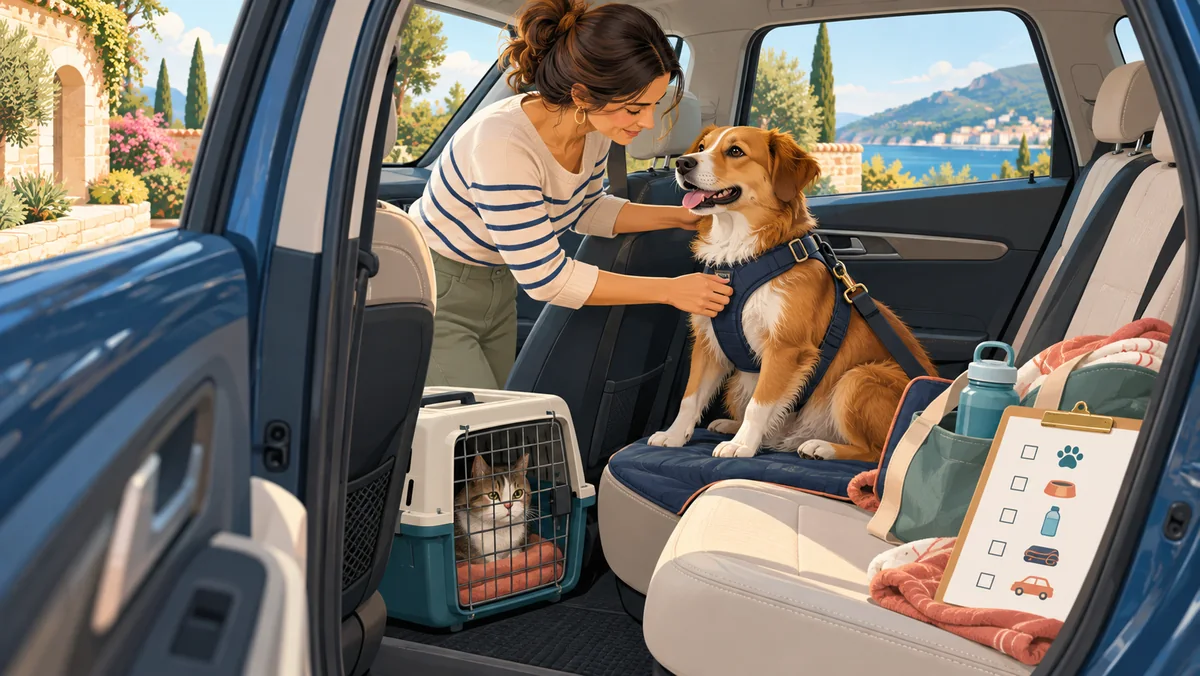
Your pet should not travel loose or interfere with the driver. Use a carrier or restraint suited to the animal and vehicle, and secure it so it cannot move dangerously. Keep ventilation and temperature comfortable. Never leave an animal in a vehicle when the temperature could create a risk.
Plan breaks appropriate to the journey while controlling doors, harnesses and leads carefully. Keep water available, but ask your vet for individual feeding advice if your pet is prone to sickness.
Dogs and cats during travel
A dog may need controlled stops to drink and toilet. A cat is generally safer inside a strong, securely closed carrier; opening it at a service area can result in escape. Familiar bedding may help provided it does not obstruct ventilation.
The handover
Allow time to review diet, medication, behaviour, permissions and every item you leave. A calm, brief departure can support an orderly transition. Before leaving, confirm how updates will be sent and whom the establishment should call if you cannot be reached.
Prepare with our packing and information checklist and first boarding stay guide.
Common questions before the journey
Should my pet eat immediately before travel?
Follow the routine agreed with the establishment and your vet. If your pet is prone to travel sickness, seek individual advice before the journey; do not introduce fasting, a large meal or new medication on departure day without advice.
Should I open the carrier during a break?
Opening a carrier in an unsecured place creates an escape risk. Keep a cat or other carrier-trained animal enclosed until you reach a fully secure space. Plan water and checks without opening the door beside a road or in an open car park.
What if we are not travelling by car?
Check the operator’s booking, carrier, document and access rules in advance. Tell the boarding establishment how and when you expect to arrive, especially when a delay could affect check-in or a scheduled medicine dose.