United Kingdom · AnimaliaHotels
Pet boarding in summer, Christmas and peak periods
Published
Reviewed by the AnimaliaHotels editorial team
School holidays, long weekends and celebrations concentrate bookings and journeys. Preparation means more than reserving early: confirm that staffing, rest, temperature, supplies and emergency response continue when demand and weather make the routine harder.
Book early, but not blindly
Ask when places normally fill, what deposit is required and whether there is a waiting list. Before paying, visit, read the terms and confirm the animal's needs can be met. Urgency around a popular date does not make an unsuitable arrangement safe.
Ask about actual occupancy and staffing
The maximum animal count is not enough. Ask how many carers work each shift, who covers absence, how simultaneous arrivals are organised and whether activities change during heat or full occupancy. Look for resting areas away from reception traffic.
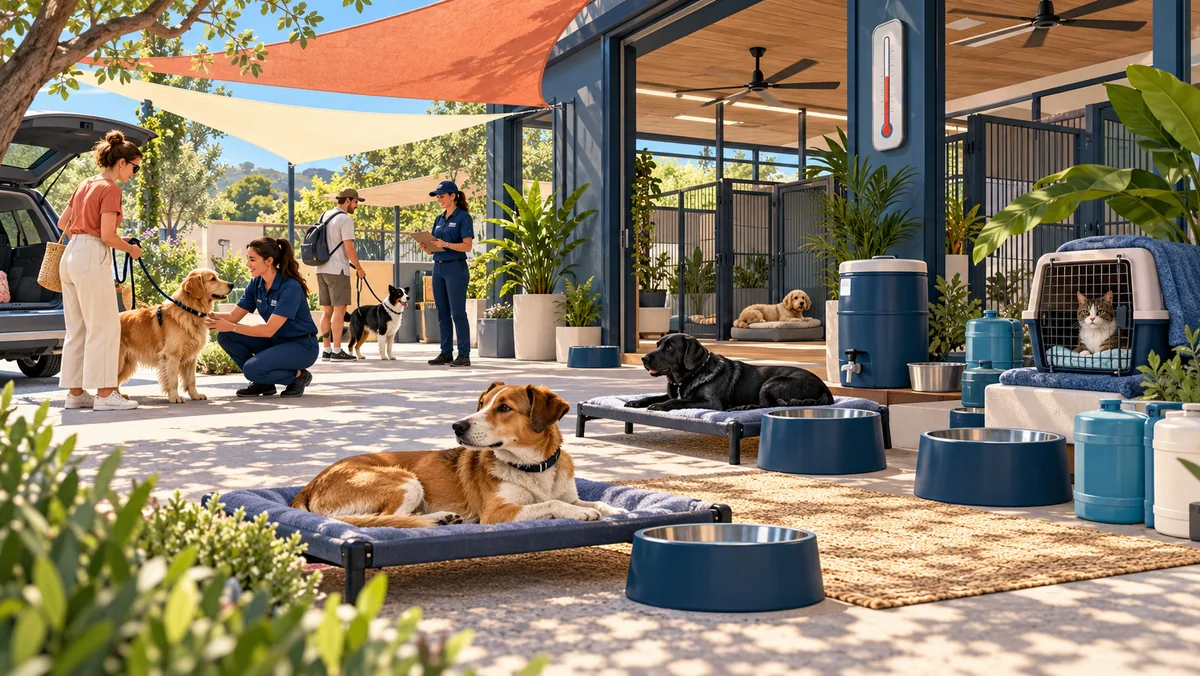
Heat: premises, routine and transport
- How temperature and ventilation are measured by day and night.
- Which shade and water points exist and how often they are checked.
- How walks, play, transport and timings change.
- What backup operates after a power or cooling failure.
- Which signs trigger safe cooling and veterinary contact.
Young, older or unwell animals and those with certain physical characteristics may need a more conservative plan. Do not decide risk from a generic number; ask the vet. Never leave an animal in a vehicle during handover.
Cats during a heatwave
Confirm access to different temperature areas, fresh water and ventilated rest away from direct sun. Cats Protection says panting or rapid breathing, drooling, confusion, vomiting, diarrhoea or collapse after heat exposure require immediate veterinary contact. This list does not replace professional assessment.
Cold, rain and short days
Ask about safe heating, dry beds, drying after exercise, indoor alternatives and outage backup. A dog comfortable outdoors may still need warm rest; a cat must be able to move away from a heat source. Confirm lighting and checks after early darkness.
Christmas, fireworks and disrupted routines
Explain noise sensitivity and ask about sound insulation, music, unit position and the fireworks plan. Do not request last-minute medication from the establishment. If a vet prescribes a plan, practise administration and provide clear instructions.
Supplies for difficult dates
Provide enough food and medicine with an agreed contingency. Identify who can replenish them when roads, flights or delivery services fail. The provider should preserve water, hygiene and essential care during disruption; ask about power backup, evacuation and alternative accommodation rather than assuming they exist.
Plan for delays and cancellation
Nominate a local person authorised to collect and decide. Travel details provide context, but the establishment needs a definite contact time. Confirm charges, extensions, reception closure and what happens if you cannot travel as planned.
A final check 48 hours before arrival
Review opening times, route, weather warnings, records, food and the alternative contact. During extreme heat, flood, snow, fire or another warning, call the establishment: having a booking does not prove travel is sensible.
Quick peak-period questions
Does air conditioning remove the risk?
No. Monitoring, maintenance, temperature choice, response to signs and failure backup still matter. Ask who checks the system out of hours. Advertised equipment does not prove every unit remains suitable.
Should arrival time change?
It may help avoid heat or traffic, but only with the establishment's agreement. Do not arrive before opening or after the final shift expecting access. Confirm a window that supports safe travel and an unhurried handover.
Combine this plan with safe transport, location and emergencies and guidance for long stays.