United Kingdom · AnimaliaHotels
Boarding webcams, photographs and useful pet updates
Published
Reviewed by the AnimaliaHotels editorial team
Seeing a pet may be reassuring, but a camera presents one angle at one moment. Useful communication combines images with staff observations about food, water, toileting, rest, medicine and behaviour.
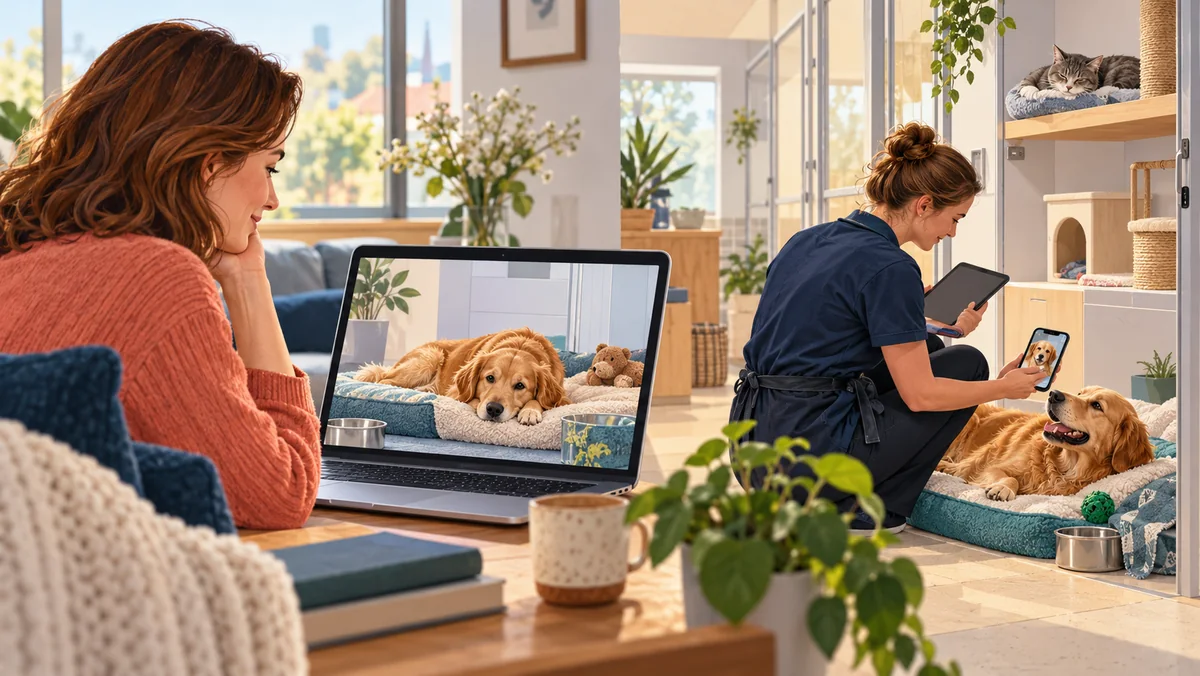
What a webcam can contribute
It can show a resting or activity area, confirm the feed is operating and reveal parts of the routine. It may also help an owner understand the space. By itself, it cannot confirm how much the animal ate, whether medicine was given, what toileting was like or what happened outside the frame.
A still image has several possible meanings
A lying dog may be resting or worried; a hidden cat may be using a normal coping strategy or showing a change. Interpret posture alongside duration, context and the individual's normal pattern. Do not call whenever the animal leaves the picture: first ask which areas the camera covers and what the routine is.
Technical questions before paying for access
- Which space is shown and when the feed is available.
- Whether it is live video or periodic images.
- Who can access it and how accounts are protected.
- How long recordings are retained, if recording occurs.
- What happens during a fault or internet outage.
- How unnecessary views of people and other clients are avoided.
In the UK, ICO guidance says an organisation should define the purpose of CCTV, minimise its impact, secure the data and explain retention and access. Exact duties vary by jurisdiction.
What a useful update should contain
- Food and water compared meaningfully with normal intake.
- Urination, faeces and any vomiting.
- Rest, exercise, play and tolerance of contact.
- Medicines given and any incident.
- A change observed, action taken and next check.
“Everything is fine” may be enough during an uneventful stay when monitoring expectations were agreed. Ask for a more structured format for an animal with medicine or a known risk.
Photographs: quality rather than volume
An occasional natural photograph may inform more than many staged images. Ask whether photography interrupts rest or requires approaching an animal that wants distance. Welfare should take priority over obtaining a pose. Confirm whether consent covers private updates, social media or advertising; they are not the same permission.
When checking increases anxiety
One or two agreed viewing times may be better than constant monitoring. If something worries you, identify the time and behaviour and request context. Avoid sending conflicting instructions to several employees. Nominate one person and channel for decisions.
A camera does not replace supervision
Ask which physical checks take place, who interprets changes and how quickly staff respond. A failed webcam should not remove monitoring. Equally, remote viewing does not make the owner responsible for detecting problems.
Reasonable privacy and security
Use a unique password and do not publish the link. Sign out on shared devices. Ask whether employees, visitors or other animals appear and how access ends after the stay. Report immediately if you can see an unrelated area or guest.
An agreement before departure
Define frequency, timing, channel, responsible person, minimum content and circumstances that trigger an immediate call. Add an alternative contact. The best communication is not the most constant; it is the communication that explains the animal's condition and enables timely action.
Questions about update quality
Should the animal always face the camera?
No. An attractive pose is neither a clinical nor behavioural measure. A distant photograph of undisturbed rest may show more respect. Request facts about the day and do not ask staff to wake, hold or repeatedly attract an animal simply to produce content.
What if updates do not arrive?
Use the agreed channel and allow the promised interval unless there is an urgent reason. If it continues, call the responsible person. Distinguish a communication fault from absent care, then request an explanation and decide whether the system is adequate for a future stay.
Assess cameras within the wider set of boarding services, visit questions and the health and emergency plan.