United Kingdom · AnimaliaHotels
Health and emergencies during a boarding stay
Published · Updated
Reviewed by the AnimaliaHotels editorial team
Health requirements vary between establishments and jurisdictions. Request the exact list early and discuss it with your vet; general guidance cannot determine which vaccinations, parasite treatments or checks an individual animal needs.
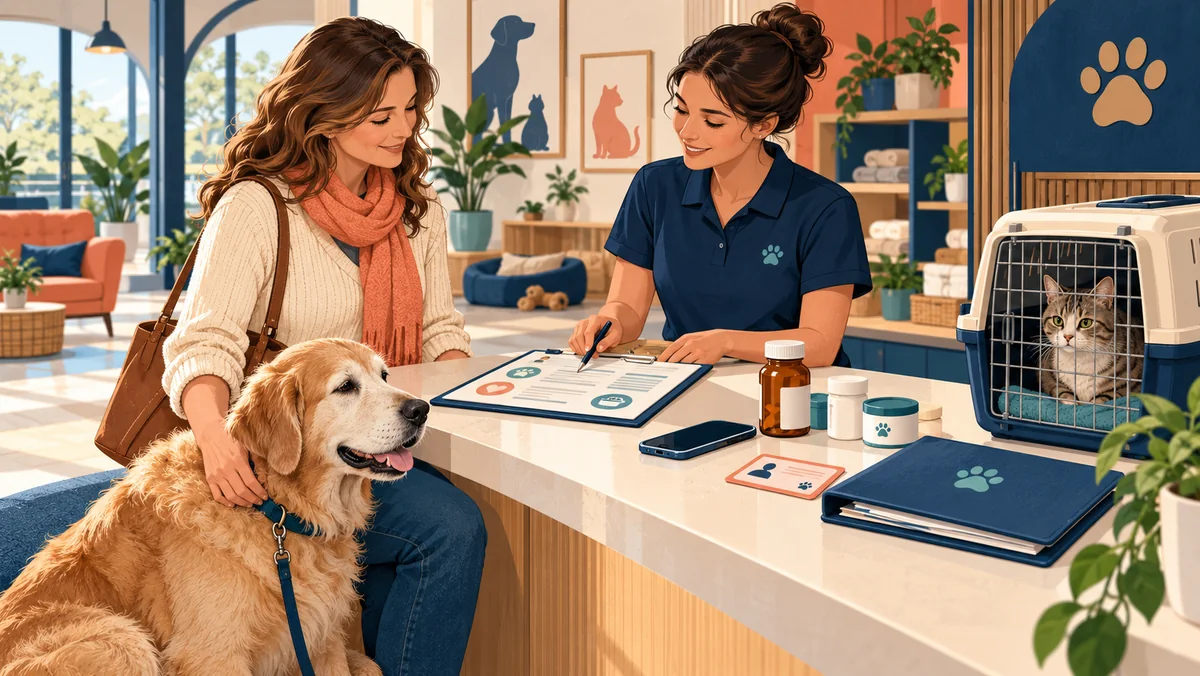
Information to provide
- Your usual vet and an alternative practice where relevant.
- Medical conditions, allergies, operations and known reactions.
- Name, dose, timing and storage of every medicine.
- Recent changes in appetite, toileting, mobility or behaviour.
- Insurance, identification and emergency contacts.
Provide legible instructions and keep a copy. Do not rely only on a conversation at check-in.
What to ask the establishment
Confirm how appetite, drinking, toileting and behaviour are monitored; who can administer medicine; where an animal with symptoms can be isolated; which vet is used; how transport works; and when the owner is contacted. Ask whether staff are present overnight or what monitoring and response system operates.
Vaccination and prevention
WSAVA distinguishes general recommendations from decisions based on individual risk. A boarding establishment may have additional requirements because of shared accommodation, regulation or policy. Ask which evidence is accepted and how far in advance it is needed. Your vet should advise on the individual plan; the boarder does not replace that consultation.
Consent and costs
Agree in writing who can consent to a consultation, tests or treatment if you cannot be reached. Record realistic limits or preferences without preventing action in a life-threatening emergency. Confirm how costs are authorised, paid and documented.
If your pet becomes unwell
Ask for specific facts: signs observed, when they began, food and water intake, actions taken and veterinary advice received. Keep an authorised local contact available. At collection, request the clinical report, medication record and follow-up instructions.
For continuing needs, read our guide to older pets and medication.
Three situations to resolve before the stay
What if my pet becomes unwell before check-in?
Tell the establishment and consult your vet. Do not conceal vomiting, diarrhoea, coughing, a wound or an important recent change to preserve a booking: other animals may be exposed and staff may not be equipped for the problem.
What if the owner cannot be reached?
Provide more than one contact, identify who can make decisions and record veterinary and spending authority in writing. Make sure the alternative contact understands the plan and will be available throughout the stay.
Can I simply bring the health record at check-in?
Not always. Ask in advance which evidence is accepted, when it expires and how early it must be completed. This leaves time to consult your vet and avoids last-minute health decisions.