United Kingdom · AnimaliaHotels
Vaccinations and health documents before pet boarding
Published
Reviewed by the AnimaliaHotels editorial team
The establishment decides which evidence it accepts; the vet decides which health plan is appropriate for the animal. These are different roles. Preparing early avoids discovering at reception that a dose, interval, signature or document is missing.
Request the establishment's exact list
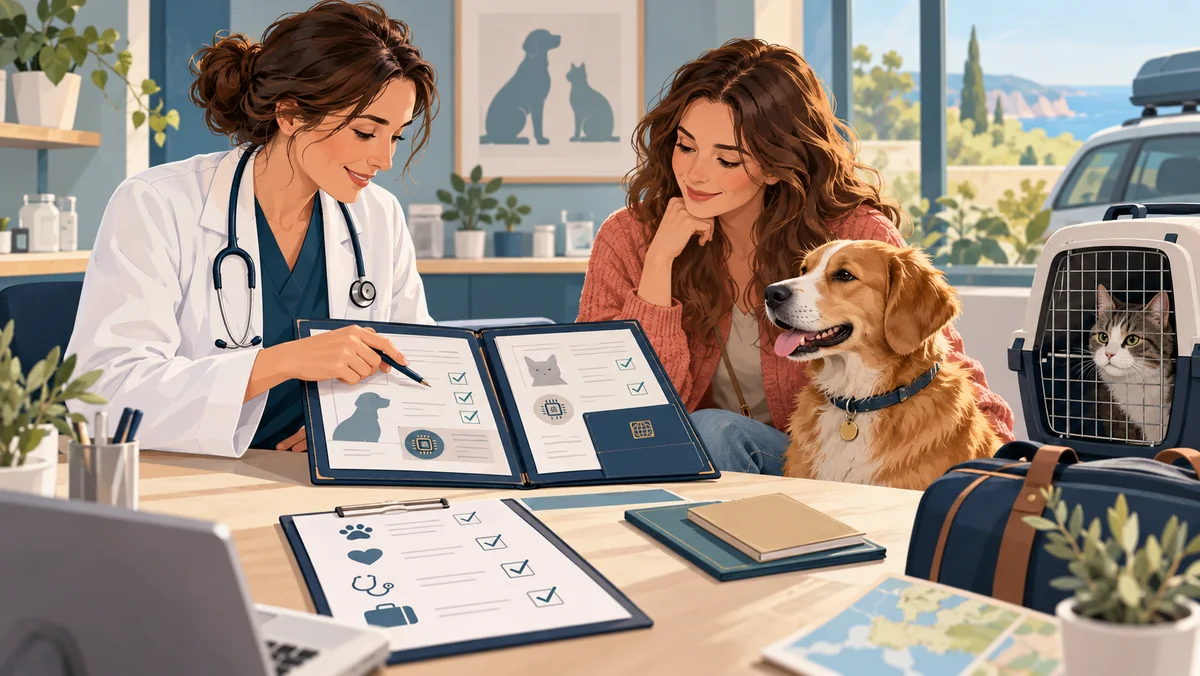
Ask for the vaccines or diseases covered, validity dates, minimum interval before admission and accepted evidence. Check whether identification, parasite treatment, flea control, a clinical certificate or another test is required. Rules differ between jurisdictions, establishments and accommodation types; an online list cannot replace the provider's current answer.
Take that list to your vet
The vet can compare it with age, history, previous schedule, product and individual risk. WSAVA distinguishes core vaccination from decisions influenced by exposure and context. That does not mean an establishment must accept every schedule: it may have regulatory duties or a stricter policy.
Dogs: questions that prevent ambiguity
Ask exactly which diseases its requirement covers and whether “kennel cough” vaccination is separate. Clarify whether antibody titre evidence may be accepted and on what terms. Do not interpret a result, change a booster or arrange urgent vaccination without veterinary advice.
Cats: records, transport and separation
Confirm requested vaccines, separation from unfamiliar cats and dogs, and the response to respiratory or digestive signs. In England, official cattery guidance requires an up-to-date veterinary vaccination record and names particular vaccines; that is a local standard, not a worldwide rule.
What useful evidence should identify
- The animal and owner unambiguously.
- Vaccine or product, date and validity where applicable.
- The veterinary practice and its validation.
- Alternative test evidence when the establishment accepts it.
- Current medicine, allergies and care needs in a separate plan.
Send a copy before travel if permitted and retain an accessible copy. Do not leave the only original without knowing how it will be stored and returned.
When there is a contraindication or special schedule
Ask the vet for written information and ask whether the establishment can accept it. Do not assume an exemption requires a provider to admit the animal. If safe admission is not possible, compare care at home or an arrangement with lower exposure.
Health changes before arrival
Report coughing, vomiting, diarrhoea, wounds, appetite loss, parasites, a recent diagnosis or contact with illness. The stay may need to be postponed to protect this animal and others. Do not conceal signs or give last-minute preventive products without direction.
Final health-file checklist
- Accepted record checked before the deadline.
- Current microchip and contact information.
- Usual vet and out-of-hours service.
- Insurance, medicine, allergies and signed instructions.
- A person authorised to decide when you cannot be reached.
Common questions about evidence
Will a photograph of the record be accepted?
That depends on the provider. Ask whether it accepts an image, PDF or digital record, or requires an original, stamp or veterinary certificate. Make sure every relevant page is legible and identification matches. Sending an incomplete photograph the day before arrival does not require the establishment to accept it.
When should preparation begin?
Start as soon as the dates are known. Some schedules require several appointments or an interval before admission, and an immediate veterinary appointment may not be available. Request the exact deadline and allow time to correct evidence. Do not use this guide to calculate a health interval yourself.
Complete the plan with health and emergency arrangements, preparation for puppies and kittens and the handover checklist.