United Kingdom · AnimaliaHotels
Dog day care or overnight boarding: what changes?
Published
Reviewed by the AnimaliaHotels editorial team
Day care looks after a dog for part of the day; boarding also assumes responsibility for rest, the night and later collection. A facility offering both does not necessarily use the same routine, staff or accommodation. Ask what happens during every period.
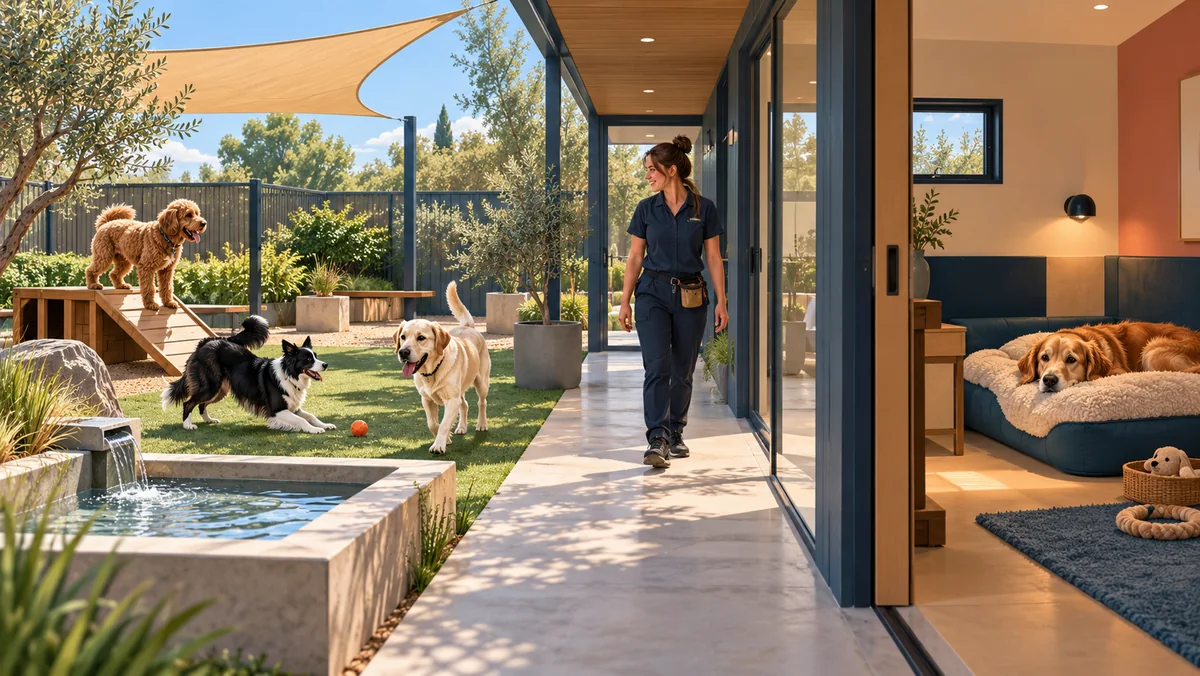
What day care is designed to cover
It may cover working hours, an occasional day or a regular routine without overnight accommodation. Its value is not measured by keeping the dog active continuously. Dogs need breaks, water, a place to withdraw, toileting opportunities and activity suited to age, health and temperament.
What an overnight stay adds
The establishment should explain where the dog sleeps, what happens after reception closes, who checks animals and how a problem receives a response. Confirm dinner, the final outing, first morning check, overnight medicine, lighting, noise and temperature. “24-hour supervision” may mean physical presence, cameras or an on-call person; request the exact definition.
Group participation should not be automatic
RSPCA guidance highlights assessment before dog day care. Ask how new dogs are introduced, which age, size and behaviour differences are considered, how many dogs join and how a dog can be separated to rest. A sociable dog may still be uncomfortable in a large group or after many hours.
Evidence that rest is planned
- Quiet areas away from the main activity.
- Real rest periods rather than exhaustion at the end of the day.
- Clean, appropriate beds or resting surfaces.
- The ability to avoid visual or physical contact.
- Records of sleep, appetite, water, toileting and behaviour.
When each option may fit
Day care may suit a dog comfortable with the facility and daytime routine. Boarding is required when nobody can provide overnight care, but adds another dimension to assess. For an anxious, reactive, young, older or unwell dog, neither label answers the question: an individual plan is needed.
A trial provides information, not a guarantee
One day may show how a dog arrives, rests and recovers, but cannot fully predict several nights. Ask what staff observed, not only whether the dog “had fun”. Report excessive tiredness, diarrhoea, appetite loss or worrying behaviour afterwards and seek veterinary advice where appropriate.
Questions for a provider offering both
- Do the dogs, responsible person or accommodation change overnight?
- How much rest is built into the day?
- Is individual exercise available when group activity is unsuitable?
- Where does the dog sleep and what monitoring operates out of hours?
- Is the day-care price included in or added to overnight boarding?
- What record is provided at collection?
Make the practical decision
Compare the complete day with the normal routine. A programme with less play but good observation and rest may be preferable to continuous activity. Request applicable licensing information, terms, assessment and an emergency plan. In England, day care, home boarding and kennel boarding are regulated activities with separate guidance; other jurisdictions use different systems.
Common questions when combining services
Can a day-care dog stay overnight on the same day?
Do not assume so. A separate booking, available sleeping unit, food and further information may be required. Confirm how the dog moves from activity to rest and whether tiredness changes group management. An intense day should not be used simply to make a dog “sleep better”.
Do more dogs provide better socialisation?
No. Quality depends on compatibility, space, supervision, duration and the ability to withdraw. Socialisation does not mean enduring continuous contact. Ask what happens when a dog avoids the group or stops enjoying interaction.
Also read how to choose boarding, prepare a first stay and explain the needs of an anxious or reactive dog.